24/7 Locksmith Service: 07442137578
Follow us:
Base: 17 Redburn St, London SW3 4DA
Email: contact@chelsealocksmith-london.co.uk

- HOME
- Emergency Locksmith
- Locksmith Services
- Areas We Cover
- Security & Locks
- Contact Us
If you’re trying to figure out thumb turn vs double cylinder, you’re probably scratching your head a bit. It’s one of those things that seems simple until you realise your choice affects safety, security, and compliance all at once.
You might think “well, I’ll just pick whichever looks nicer,” but here’s the thing: where the door is, who’s using it, and how it fits into fire escape routes all matter.
Whether you’re fitting new locks and front doors in a residential block, upgrading locks after a regular fire risk assessment, or just trying to follow flat door regulations, understanding the differences can save you stress and potentially a lot of money. You want your property secure, your tenants safe, and compliance with fire safety regulations guaranteed.
Choosing between them usually comes down to your door and who’s behind it. If you’ve decided to switch, it’s a straightforward cylinder change or high-security upgrade
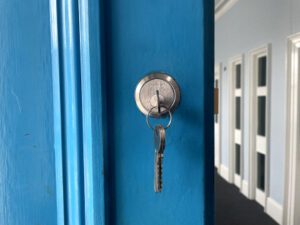
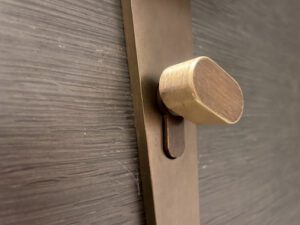
Here’s the simple version. A thumb turn lock lets you twist the knob on the inside and go. That’s it. No fumbling for keys, no delay if you’re carrying shopping or a small child. Quick. Convenient. Safe.
Now, a double cylinder lock? To open a double cylinder deadbolt, or double cylinder lock, you’ll need a key. You can insert the key from either side of the door. Now, this sounds secure, right? And it is, which is why it’s a popular choice.
But now, imagine a fire, smoke filling the corridor, and you have to find a key; those few extra seconds could be critical.
This is why it is critical to balance security and safety in your choice; one isn’t better than the other, it’s all circumstantial.
Fire doors aren’t just decorative; they’re lifesavers. They’re tested to give everyone inside time to escape during a fire. Within any flats, there is always a designated escape route, and any door within that fire exit escape route needs to be able to be unlocked instantly.
If you are in a flat, smoke can travel quickly… You don’t want a lock that’s clever for security but impossible to twist in a hurry. That’s where a thumb turn lock, otherwise known as a single cylinder deadbolt, really shines, you just twist and go. No keys. No panic. Compliant with fire door regulations and ideal for flat entrance doors.
And here’s the kicker: if your locks don’t meet the rules, it’s not just a risk to residents; you could also face liability if something goes wrong. Following flat door regulations isn’t just red tape; it’s about keeping people safe. That’s why we always check door frames and escape routes before recommending a configuration. The same assessment matters for fire door lock compliance.
There are times when a double cylinder lock is exactly what you need. Ground floor doors, side doors with glazing, storage rooms, anywhere a thief could smash a window and reach in. Here, a double cylinder deadbolt prevents that.
You’ll see these in commercial properties and private flats where security risks are higher. The extra key requirement adds a layer of protection.
However, in order to stay on the right side of fire safety and pass a fire risk assessment, double cylinder locks should be avoided on fire exit routes: the UK’s strict building regulations mean you need to comply with this.
You’ll need a key even to exit, which could be a fire hazard. That’s why we always check door frames, door leaves, and escape routes before recommending a double cylinder deadbolt. It’s about using the right tool for the job, not just locking everything up.
So, you’re weighing up your options: thumb turn (single cylinder deadbolt) or double cylinder lock.
Now, let’s run you through each in a little more detail.
Ideal for communal areas, communal doors and multi-residential settings, everyone can operate independently
Quick access and an easy exit in an emergency, no key needed
Compliant with fire safety rules, most thumb turns meet BS3621 and TS007 3-star standards
They prioritize convenience and safety considerations in the event of an emergency
Could pose safety risks if there are windows nearby, ground-floor flats need extra vigilance
See? It’s not about better or worse, it’s about the right choice for the right door.
Another common point of confusion is single cylinder vs double cylinder deadbolt.
Single cylinder deadbolt: Key outside, thumb turn inside. Fast exit, compliant, user-friendly.
Double cylinder deadbolt: Key required both sides. Adds security but can pose fire risks if mismanaged.
In most residential applications, particularly individual flats, a single cylinder deadbolt with a thumb turn is ideal, especially on escape route doors and in high risk areas. Double cylinders are better reserved for ground floor side doors, storage areas, and other non-escape routes.
If you are a property manager who manages multi-unit buildings, such as a block of flats, regular fire safety risk assessments are legally required, where things such as fire door regulations are checked against.
While they may be a legal requirement for local authorities, they ensure that enhanced protection in residential properties is not done to the detriment of the safety of the many homeowners or renters in your building.
During these overall checks and assessments of fire door regulations, assess:
Fire doors
Locking mechanisms
Smoke seals and intumescent strips
A double cylinder lock on the designated escape route fire doors will usually be flagged, a potentially dangerous setup. A thumb turn lock on fire doors removes that risk while maintaining adequate protection and fire safety compliance.
You’ll have peace of mind knowing tenants can exit quickly and safely.
Before you decide on single cylinder vs double cylinder, check with your insurance provider. Some policies insist on BS3621 or TS007 3-star locks.
A professional locksmith can evaluate your doors, escape routes, and building layout. They’ll explain which locks suit your needs, which comply with fire safety regulations, and how to balance security and quick access.
This avoids mistakes like installing double cylinder locks on escape routes, something we see all too often in older buildings across London.
From a resident’s point of view, thumb turn locks are simple and intuitive. You won’t have to teach everyone how to unlock the door in a hurry.
Quick exit from flats or communal doors: no searching for keys
Works for children, elderly, or disabled residents: everyone can operate the lock
Safe to use with smoke seals and fire doors: fully compliant
Clutch mechanisms prevent intruders from forcing the knob: adds an extra layer of protection without compromising fire safety
You’ll notice the difference immediately: easier access, less stress, and full peace of mind.
Despite the convenience of thumb turns, some doors truly need a double cylinder lock:
Ground floor doors with nearby windows: protects against break-ins
Garage side doors: adds security without external bars
Storage areas or commercial buildings: higher risk areas
However, you should be sure to avoid placing them on fire exits, and this will be a fire safety order violation and a fire hazard.
Choosing the right lock isn’t just about safety, it has to be cost effective, while providing that added layer of security. You’ll save in the long run by picking the right solution. Thumb turns cost a little more upfront but guarantee compliance. Double cylinders can be cheaper but require careful management.
In multi-unit buildings, professional advice is worth every penny. You’ll avoid costly retrofits, fines, and insurance issues — and everyone stays safe.
Even the best lock fails if installed poorly. Our professional locksmiths will:
Check door alignment and door leaf movement
Test the locking mechanism to ensure smooth operation
Confirm compliance with fire safety regulations
In Chelsea, South Kensington, and Kensington, we often see older doors that need careful fitting. With a professional, you’ll know your thumb turn or double cylinder lock works as intended, every time.
Get in touch with us for advice or installation.
A thumb turn lock opens from the inside without a key. A double cylinder lock requires a key on both sides.
Yes. You can unlock instantly, making them fully compliant. That’s why we always check door frames and escape routes before recommending a configuration (the same assessment matters for fire door lock compliance).
Mainly for doors with nearby windows, garages, or storage areas. Avoid escape routes.
Yes, if they’re BS3621 or TS007 3-star approved. If you’re not sure yours qualifies, we can check and fit insurance-approved locks that meet BS3621.
07442137578
contact@chelsealocksmith-london.co.uk